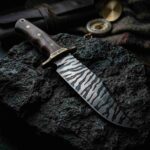
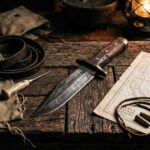
Few knives carry the weight of legend quite like the Jim Bowie knife. It’s more than a tool. It’s a piece of American history, wrapped in stories of frontier bravery, deadly duels, and one larger-than-life man who gave it his name. Whether you collect blades, study history, or simply love a good story, the Bowie knife has a way of pulling you in.
So how did one knife become so iconic? And what really happened to the original blade carried by Jim Bowie himself? Let’s dig into the facts, the folklore, and everything in between.
Who Was Jim Bowie?
James “Jim” Bowie was born around 1796 in Kentucky and grew up on the rough American frontier. He was a pioneer, land speculator, and soldier known for his courage and his temper. By his thirties, he had built a fierce reputation across the South.
Most people remember him for two things: his death at the Battle of the Alamo in 1836, and the knife that bears his name. He fought and died alongside other Texas legends, cementing his place as a symbol of grit and rebellion.
But the knife came first. And the story behind it is just as dramatic as the man.
The Birth of the Jim Bowie Knife
The legend of the Bowie knife really took off after one bloody event: the Sandbar Fight of 1827.
The Sandbar Fight
On a sandbar near Natchez, Mississippi, what started as a formal duel turned into a chaotic brawl. Jim Bowie was stabbed, shot, and beaten. Yet he managed to fight back using a large knife, killing one of his attackers and wounding others.
News of the fight spread fast. Suddenly, everyone wanted to know about the knife Bowie used to survive against impossible odds. Men across the frontier asked blacksmiths to make them “a knife like Bowie’s.” That single moment turned a personal weapon into a national obsession.
Who Actually Made the Knife?
This is where things get murky. A few stories compete for the truth.
- Rezin Bowie, Jim’s brother, claimed he designed the original knife and gave it to Jim for protection.
- James Black, an Arkansas blacksmith, is often credited with crafting the refined version that became the classic Bowie design.
- Some historians believe the early knife was a simple butcher-style blade that evolved over time.
The honest answer? No one knows for certain. The mix of fact and myth is part of what makes the Jim Bowie knife history so fascinating.
What Did the Original Jim Bowie Knife Look Like?
When people picture a Bowie knife today, they imagine a big, bold blade with a curved tip. But the jim bowie original knife was likely simpler than the dramatic versions we see now.
Early descriptions suggest the original featured:
- A long blade, roughly 9 to 12 inches
- A straight back with a sharpened, clipped point
- A solid wooden or bone handle
- A heavy, balanced feel built for both fighting and utility
Over the years, blacksmiths added features like the brass back strip (meant to catch an opponent’s blade) and a larger cross guard to protect the hand. These touches turned a practical frontier tool into the dramatic weapon we recognize today.
If you want to see how modern craftsmanship honors that original spirit, take a look at this classic Bowie knife design. It captures the balance of beauty and function that made the style famous.
The Design That Defined a Legend
What makes a Bowie knife a Bowie knife? A few key features set jim bowie’s knife apart from ordinary blades.
The Clip Point
The most recognizable feature is the clip point. The back edge of the blade curves down toward the tip, creating a sharp, controllable point. This made the knife great for both detailed work and serious fighting.
The Cross Guard
A strong cross guard sits between the blade and handle. It protected the user’s hand during combat and gave the knife its bold, unmistakable look.
The Size and Weight
Bowie knives were big. The size made them useful for everything from skinning game to chopping wood to self-defense. On the frontier, a single reliable blade often had to do the job of many tools.
This blend of strength and versatility is why the design still inspires knife makers today. You can explore a full range of these blades in this collection of authentic Bowie knives.
What Happened to Jim Bowie’s Original Knife?
Here’s the question every history buff asks: what happened to jim bowie’s knife after he died at the Alamo?
The truth is, no one really knows.
When the Alamo fell in March 1836, Jim Bowie was sick and likely fighting from his bed. Mexican forces overran the fort, and in the chaos, personal items were scattered, taken, or lost. His famous knife vanished into history.
Over the years, several knives have surfaced with claims of being “the real one.” Museums and collectors have displayed blades said to belong to Bowie. But proving authenticity is nearly impossible. There are no clear records, no photographs from that era, and too many copies made during his lifetime.
So the original Jim Bowie knife remains a mystery. Some believe it was buried with the dead. Others think a Mexican soldier carried it home as a trophy. A few hope it’s still out there, waiting to be found. That mystery only adds to the legend.
The Cultural Legacy of the Bowie Knife
The Jim Bowie knife didn’t just survive its namesake. It became a permanent part of American culture.
A Symbol of the Frontier
In the 1800s, owning a Bowie knife meant you were tough, independent, and ready for anything. It became the unofficial blade of pioneers, hunters, and adventurers heading west. Some states even passed laws regulating their size because they were so common in fights.
Hollywood and Pop Culture
Movies, TV shows, and books kept the legend alive. From Western films to survival stories, the big, gleaming Bowie blade became shorthand for rugged heroism. Think of nearly any frontier hero, and there’s a good chance a Bowie-style knife was on his belt.
A Collector’s Treasure Today
Modern knife enthusiasts still prize Bowie knives for their history and craftsmanship. Whether handmade by skilled smiths or produced for everyday use, they connect owners to a bold chapter of the past. A well-made Bowie knife isn’t just a tool. It’s a story you can hold in your hand.
Why the Jim Bowie Knife Still Matters
It’s rare for a single object to capture an entire era, but the Bowie knife does exactly that. It represents survival, independence, and the wild spirit of early America. The blend of real history and tall tales keeps people talking nearly two centuries later.
For collectors, it’s a prized piece. For history lovers, it’s a window into the frontier. And for anyone who appreciates fine craftsmanship, it’s proof that a great design never really goes out of style.
Frequently Asked Questions
What is a Jim Bowie knife?
A Jim Bowie knife is a large fixed-blade knife named after frontiersman James Bowie. It typically features a long blade, a clip point, and a cross guard. The design became famous in the early 1800s and remains a classic style today.
Is the Jim Bowie knife history based on real events?
Yes. The knife’s fame grew from the real Sandbar Fight of 1827, where Bowie used a large blade to survive a violent brawl. While many details have been exaggerated over time, the core events truly happened.
Who made the original Jim Bowie knife?
That’s still debated. Some credit Jim’s brother, Rezin Bowie, with the design, while others point to Arkansas blacksmith James Black for the refined version. There’s no definitive record, which adds to the mystery.
What did jim bowie’s knife actually look like?
The original was likely a large, simple blade around 9 to 12 inches long with a clipped point and a sturdy handle. Later versions added features like a brass back strip and a larger guard, creating the dramatic look we know today.
What happened to jim bowie’s knife after the Alamo?
No one knows for sure. After Bowie died at the Alamo in 1836, his knife disappeared in the chaos of battle. Various blades have claimed to be the original, but none have been confirmed.
Can anyone buy a Bowie knife today?
Yes. Modern Bowie knives are widely available for collectors, hunters, and outdoor enthusiasts. Many are crafted to honor the traditional design while using high-quality materials.
Why is the Bowie knife so famous?
Its fame comes from a mix of real history, frontier legend, and pop culture. The knife symbolizes courage and independence, and the mystery surrounding the original keeps interest alive.
Conclusion
The Jim Bowie knife is far more than a blade. It’s a legend forged in real events, sharpened by storytelling, and preserved through generations of admirers. From the dramatic Sandbar Fight to the unsolved mystery of what happened to jim bowie’s knife, every part of its story adds to the appeal.
The original may be lost to history, but the spirit of the design lives on in every quality Bowie knife made today. If you’re ready to own a piece of that legacy, explore our handcrafted collection and find a blade that carries the same bold tradition Jim Bowie made famous.