A ruby finish turns a working blade into a piece worth displaying. The deep red shimmer catches light the way few knife treatments can, and it has pushed the bowie knife ruby into one of the most requested styles among collectors today. If you’re weighing your first purchase or adding to a growing collection, understanding what this finish actually is will save you money and disappointment.
Let’s break down the finish, the doppler pattern behind it, and how to spot real quality before you buy.
What Is a Bowie Knife Ruby Finish?
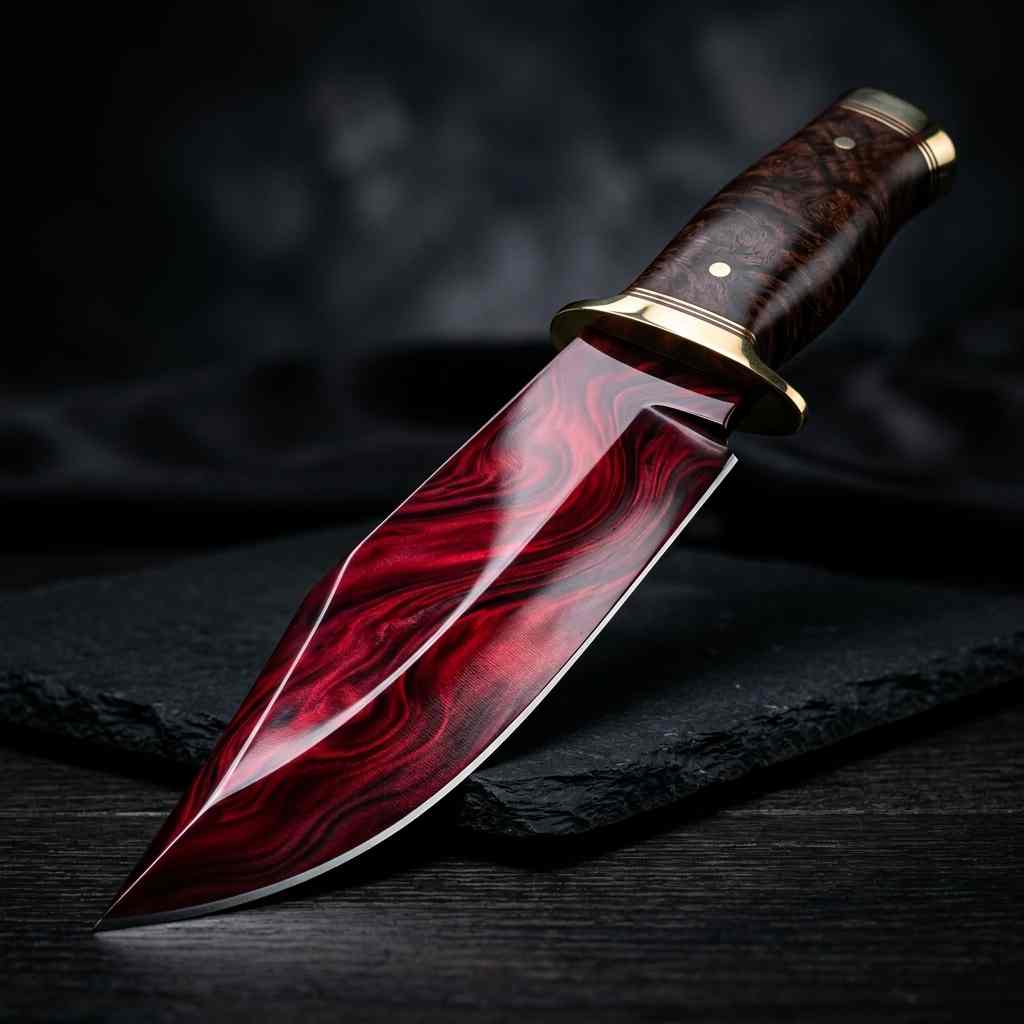
A ruby finish is a red-toned surface treatment applied to the blade, and sometimes the handle fittings, of a bowie knife. The name comes from the gemstone-like color: a rich, saturated red that shifts between crimson and deep burgundy depending on the light.
The finish is created through controlled heat treatment, coating, or anodizing, depending on the blade material. On high-carbon steel, artisans often use a heat-based coloring process. On stainless or titanium-coated blades, physical vapor deposition (PVD) produces a harder, more durable ruby layer.
The result is a knife that keeps the classic bowie profile while standing out visually. A ruby bowie knife pairs the traditional clip-point blade and large crossguard with a color that reads as premium rather than flashy.
The Doppler Ruby Pattern Explained
The word “doppler” borrows from gaming and collectible culture, where a doppler finish means a color that shifts and swirls across a surface. A bowie knife doppler ruby carries that same idea into steel.
Instead of a flat, uniform red, a doppler ruby shows movement. You’ll see:
- Color transitions that flow from bright red into darker maroon zones
- Swirled or marbled patterns across the flat of the blade
- Highlight points where the finish catches light and appears to glow
No two doppler ruby blades look exactly alike. That variation is the point. A bowie knife ruby doppler is prized precisely because the pattern is unique to each piece, much like a fingerprint in steel.
This uniqueness also matters for value. Collectors pay more for blades with striking, well-balanced doppler patterns, so the visual quality of the swirl directly affects what a knife is worth.
What Makes Ruby-Finish Bowie Knives Desirable
Color alone doesn’t explain the demand. Several factors work together.
Visual Impact
A ruby finish reads as luxury. Displayed on a stand or in a case, the red catches attention in a way that plain satin or black-coated blades never will. For collectors who display their pieces, that presence matters.
Craftsmanship Signal
A clean, even ruby finish is hard to achieve. Streaks, dull patches, or uneven coloring reveal rushed work. A well-executed finish signals that the maker took time with the blade, which usually points to better overall quality.
Collectibility
Because doppler patterns vary from blade to blade, ruby bowie knives appeal to buyers who want something that feels one-of-a-kind. Limited runs and custom orders push this further, making certain pieces genuinely rare.
Versatility
A bowie knife ruby works as both a display piece and a functional tool, provided the finish sits on quality steel. You get the visual appeal without giving up the cutting performance a bowie is built for.
How to Identify a Quality Ruby Bowie Knife
Looks can hide poor construction. Use these checks before you commit.
Inspect the steel first: The finish means little if the blade underneath is weak. Look for high-carbon steel (such as 1095 or D2) or a quality stainless like 440C. The steel type should be listed clearly.
Check finish consistency: Run your eye across the blade in good light. A quality ruby finish stays even in tone with intentional pattern movement. Random dull spots or scratched patches suggest a cheap coating.
Test the finish durability: PVD and heat-treated finishes resist wear far better than sprayed-on coatings that chip within weeks. Ask the seller how the finish was applied.
Examine the handle and fittings: Quality bowie knives use stabilized wood, micarta, bone, or brass fittings. Loose scales or gaps at the guard point to poor assembly.
Look at the tang: A full tang, where the steel runs the length of the handle, means a stronger, more reliable knife. This detail separates serious blades from decorative imitations.
If you want to compare finishes and construction side by side, browsing a dedicated range of bowie knives gives you a clear sense of what quality looks like across different steel types and handle materials.
Buying Tips for Your First Ruby Bowie Knife
A few practical points will help you buy with confidence.
- Set your purpose: Decide whether you want a display piece, a user knife, or both. This shapes how much finish durability matters.
- Buy from sellers who share specs: Steel type, tang construction, blade length, and finish method should all be documented. Vague listings hide shortcuts.
- Study the doppler pattern in photo: Ask for images of the exact knife you’ll receive, since each doppler ruby differs.
- Check return terms: A finish can look different in person than on screen. A clear return policy protects you.
- Factor in maintenance: Carbon steel blades with heat-based ruby finishes need light oiling to prevent rust. Stainless and PVD options are more forgiving.
Match the knife to how you’ll actually use it, and the buying decision becomes much simpler.
Frequently Asked Questions
What does doppler ruby mean on a knife?
A doppler ruby refers to a red finish with a shifting, swirled pattern rather than a flat, uniform color. The pattern moves across the blade and varies from one knife to the next, making each piece unique.
Are ruby bowie knives functional or just for display?
They can be both. A ruby bowie knife built on quality steel with a full tang performs as a working tool while offering strong visual appeal. Purely decorative versions exist too, so check the construction before buying.
How do I care for a bowie knife ruby doppler finish?
Wipe the blade clean after use and keep it dry. Carbon steel versions need occasional light oiling to prevent rust. Avoid abrasive cleaners that can scratch or dull the finish.
Why do ruby-finish bowie knives cost more?
The finish is difficult to apply evenly, and doppler patterns are unique to each blade. That combination of skilled work and one-of-a-kind appearance raises both demand and price.
Does the ruby finish affect blade performance?
A properly applied finish sits on the surface and does not weaken the steel. Performance depends on the underlying blade material and heat treatment, not the color.
How can I tell if a ruby finish is high quality?
Look for even color with intentional pattern movement, no chipping or dull patches, and a finish method the seller can explain. Quality finishes resist wear and stay vibrant over time.
Conclusion
A bowie knife ruby brings together two things collectors value most: the timeless bowie profile and a finish that genuinely stands out. The doppler ruby pattern adds a layer of individuality, since no two swirls are the same, which is why these blades hold their appeal on a display stand and in a collection alike.
Focus on the steel beneath the color, check the finish for consistency, and buy from a seller who documents their work. Do that, and your ruby bowie knife will reward you with both performance and presence for years to come.