If you have ever attended a formal Catholic mass or parade, you might have noticed men standing at attention, dressed in striking regalia, holding ornate swords. These men belong to the Fourth Degree of the Knights of Columbus, a global Catholic fraternal service order. The sword they carry is far more than a simple accessory. It stands as a profound symbol of patriotism, honor, and duty.
Whether you recently inherited a vintage piece, want to join the order, or simply collect historical memorabilia, understanding the details of these blades is essential. This guide covers everything you need to know about the Knights of Columbus sword. We will explore the deep meaning behind the design, how to identify different models, assess their current market value, and learn how to acquire one.
The Knights of Columbus Sword Meaning
To truly appreciate these fascinating artifacts, you must first understand the Knights of Columbus sword meaning. The Knights of Columbus features four distinct degrees, each teaching a core principle. The Fourth Degree, established in 1900, focuses entirely on the principle of patriotism.
When a member reaches this final degree, they become a “Sir Knight” and earn the privilege of joining the Color Corps. The sword they carry represents their willingness to defend their faith, their country, and the ideals of the order. It is never intended for combat. Instead, the sword serves as a visual metaphor for civic duty and spiritual readiness.
When Sir Knights draw their swords during a ceremony, they present a united front of honor and respect. The act of drawing and holding the sword during specific moments of a church service or civic event signifies a deep commitment to protecting the vulnerable and upholding strong moral values.
Examining the Knights of Columbus Ceremonial Sword
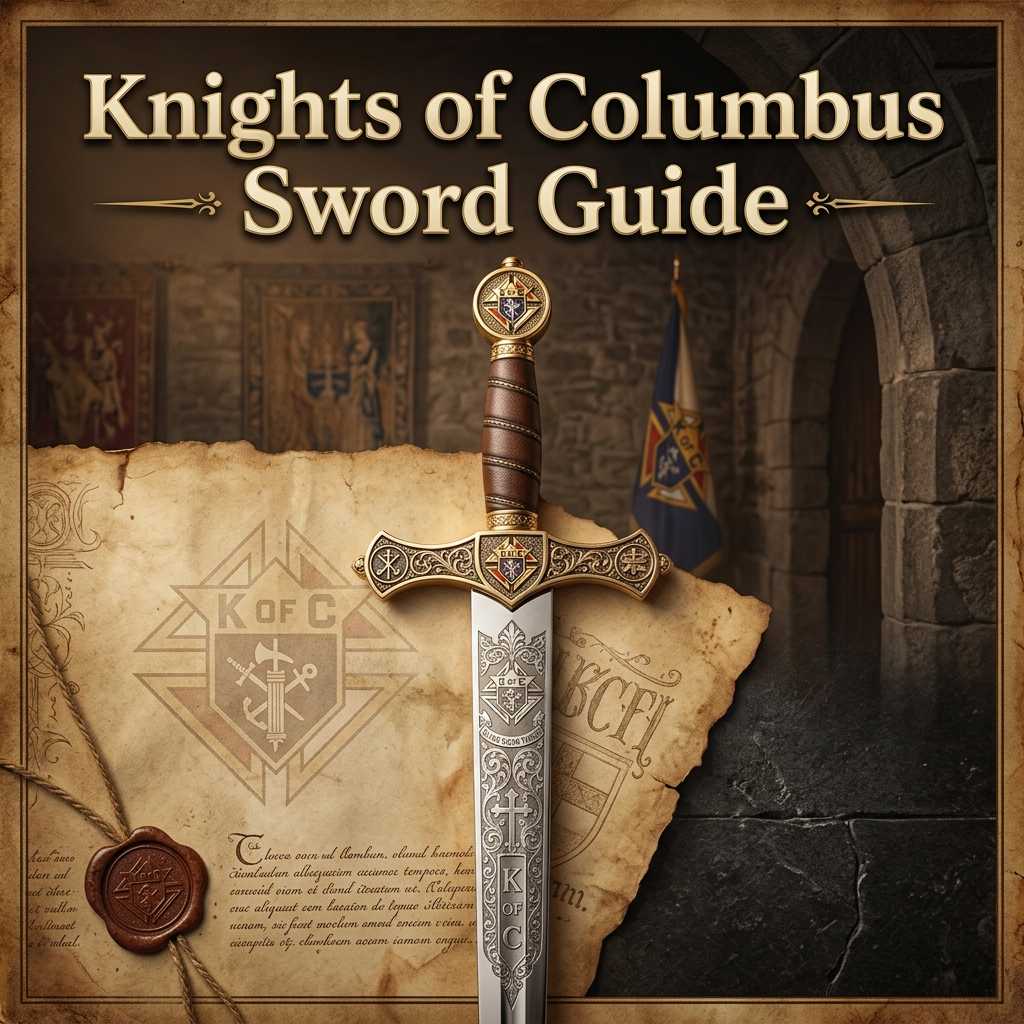
The Knights of Columbus ceremonial sword is a masterpiece of symbolic design. Every element, from the pommel at the top of the handle to the tip of the scabbard, tells a story about the organization’s history and values.
When you hold a ceremonial sword, you will notice the intricate etching along the blade. These blades almost always feature detailed scrollwork, scenes of medieval crusaders, and the name of the specific Knight to whom the sword belongs. The handle and guard display equally impressive craftsmanship.
Sir Knights carry these swords during special liturgical events, wakes, and parades. The swords rest in highly decorated scabbards, which attach to a specialized baldric or service belt. The entire ensemble projects dignity and solemnity, turning a standard march into a highly respected ceremonial display.
Knights of Columbus Sword Identification
If you find an old fraternal sword at an antique shop, how do you know if it belongs to the Knights of Columbus? Proper Knights of Columbus sword identification requires looking at a few key characteristics. Over the past century, various manufacturers produced these swords, but they all share common identifying markers.
The Pommel
The most recognizable feature of the sword is the pommel—the knob at the very top of the handle. Historically, the pommel featured a detailed bust of Christopher Columbus. On some variations, particularly newer models or specific regional designs, you might find an eagle holding an American flag or a traditional knight’s helmet.
The Grip
The grip of the sword typically comes in three distinct colors, which denote the rank or position of the Sir Knight within the Color Corps:
- Black grips: Carried by standard Sir Knights.
- White or Ivory grips: Carried by Faithful Navigators, Masters, and higher-ranking officers.
- Wire wrapping: The grip itself often features a tight wire wrap winding around the handle to provide texture and aesthetic appeal.
The Crossguard
The crossguard separates the handle from the blade. On a genuine knight of columbus sword, you will often find the letters “K of C” prominently displayed in the center of the guard. You may also see a globe, a cross, or an eagle incorporated into the metalwork.
Maker’s Marks
Look closely at the base of the blade, just above the crossguard. Authentic swords feature a stamp or etching from the manufacturer. Historical makers include Ames Sword Company, Henderson-Ames, The C.E. Ward Company, and Lynch. Finding one of these stamps helps verify the sword’s authenticity and age.
Knights of Columbus Sword Value
Collectors and family members often ask about the Knights of Columbus sword value. Like any antique or fraternal item, the price fluctuates based on several vital factors: age, condition, manufacturer, and provenance.
Most standard ceremonial swords hold a modest market value. You can expect to see prices ranging from $100 to $300 for a sword in average condition. However, exceptional pieces can command higher prices, sometimes reaching $500 or more.
Here is what impacts the value:
- Condition: A pristine blade with clear etching and no rust is highly desirable. Scabbards that retain their original plating without dents also increase the price.
- Age: Early swords from the early 1900s, especially those manufactured by the renowned Ames Sword Company, carry a premium over modern replicas.
- Customization: Because these swords were personal items, they almost always feature the original owner’s name etched into the blade. While this is historically interesting, it generally does not drastically increase or decrease the value unless the owner was a notable historical figure.
- Completeness: A sword sold with its original scabbard, carrying case, and service baldric will always fetch a higher price than a bare blade.
Also Read: The Complete Knight Sword Guide: History and Virtual Legends
How to Get a Knights of Columbus Sword
There are two primary ways to obtain one of these blades, depending on your intentions and membership status.
If you want to know how to get a knights of columbus sword for official use, you must first join the organization. After completing the first three degrees, you must apply for and complete the Fourth Degree exemplification. Once you become a Sir Knight, you can purchase an official sword and the necessary regalia directly through the order’s authorized supply companies. This ensures your equipment meets the strict, current uniform standards required for Color Corps participation.
If you are a collector, historian, or someone looking to replace a lost family heirloom, you take a different route. Because the order has existed for well over a century, thousands of these swords exist in the secondary market.
Finding a Knights of Columbus Sword for Sale
Tracking down a Knights of Columbus sword for sale outside of official channels is relatively easy if you know where to look. Many families sell these items during estate liquidations when they have no direct connection to the organization.
You can frequently find them at local antique malls, flea markets, and military surplus stores. Online auction sites remain the most reliable way to browse a wide variety of fraternal swords. When shopping online, carefully review the photos of the blade and scabbard. Look out for heavy pitting or rust on the blade, as this is difficult and costly to repair.
Always ask the seller about the condition of the scabbard throat and the tightness of the handle. A loose handle or a scabbard that won’t hold the blade securely will require professional restoration.
Frequently Asked Questions
Are Knights of Columbus swords sharp?
No. These are strictly ceremonial pieces. The blades feature unsharpened edges and blunted tips. They are designed for visual impact and ceremonial drills, not for cutting or combat.
Can a non-member own a Knights of Columbus sword?
Yes. There are no laws or broad restrictions preventing a non-member from owning, buying, or collecting these swords. However, only active Fourth Degree members in good standing may wear them during official liturgical or civic ceremonies.
How do I clean and maintain a ceremonial sword?
Wipe the blade with a soft, dry cloth after handling it to remove the oils from your skin. You can apply a very light coat of mineral oil to the blade to prevent rust. Avoid using harsh abrasive polishes, as these can easily strip away the historical etching and damage the metal plating on the guard and scabbard.
Conclusion
The Knights of Columbus sword remains a beautiful and powerful piece of fraternal history. Whether you admire the deep patriotic meaning, appreciate the ornate craftsmanship of the pommel and guard, or want to add a unique piece to your antique collection, these swords offer incredible historical value. By understanding how to identify authentic marks and assess their condition, you can confidently preserve and honor these remarkable ceremonial blades for generations to come.